


2001 - 2005
Families and Scientists Shape a Shared Vision
Beginning in 2001, advocate Shannon Lord and neurologist Tetsuo 'Tee' Ashizawa, MD, helped connect family experience with the international DM research community. Dr. Ashizawa had co-founded IDMC in 1997; Shannon participated in successive meetings and, in 2005, convened families in North America around the need for a dedicated DM-focused organization. MDF grew from that community vision and an early commitment to partnership with scientific leaders.
- Meet Shannon Lord
- Meet Tetsuo 'Tee' Ashizawa, MD
- Official IDMC-4 Patient Booklet
- Official IDMC-5 Program

2006 - 2008
A Foundation Built for DM
Organizers translated that vision into a U.S.-based nonprofit dedicated solely to DM. MDF was formally incorporated as a 501(c)(3) non-profit organization in California in 2007 with a founding Board and Scientific Advisory Committee, early support groups, and the handshake logo. In 2008, Lisa Harvey-Duren became MDF's first Executive Director, adding the leadership and operating structure needed to serve a growing community.

2008
Creating a Trusted Online Home for DM
MDF launched myotonic.org to give people and families a trusted, welcoming place to learn about DM. At a time when online searches often led to technical literature and clinical imagery with little practical context, the site made understandable information, support, and community easier to find.

2009
Supporting New Researchers and Bringing Families Together
MDF launched two programs that would shape its long-term model: a Research Fellowship Program to attract and retain emerging DM scientists, and the first Family Conference, where families, clinicians, and researchers could learn directly from one another. Together, they paired investment in expertise with sustained partnership with the community.

2009
Improving Anesthesia Safety for People with DM
MDF formalized and updated practical guidance on the serious anesthesia risks associated with DM, helping people living with DM and clinicians prepare more safely for procedures. Continuously maintained and expanded, the anesthesia resources have become among MDF's most important contributions to care and remain essential tools for families and medical teams.

2010 - 2012
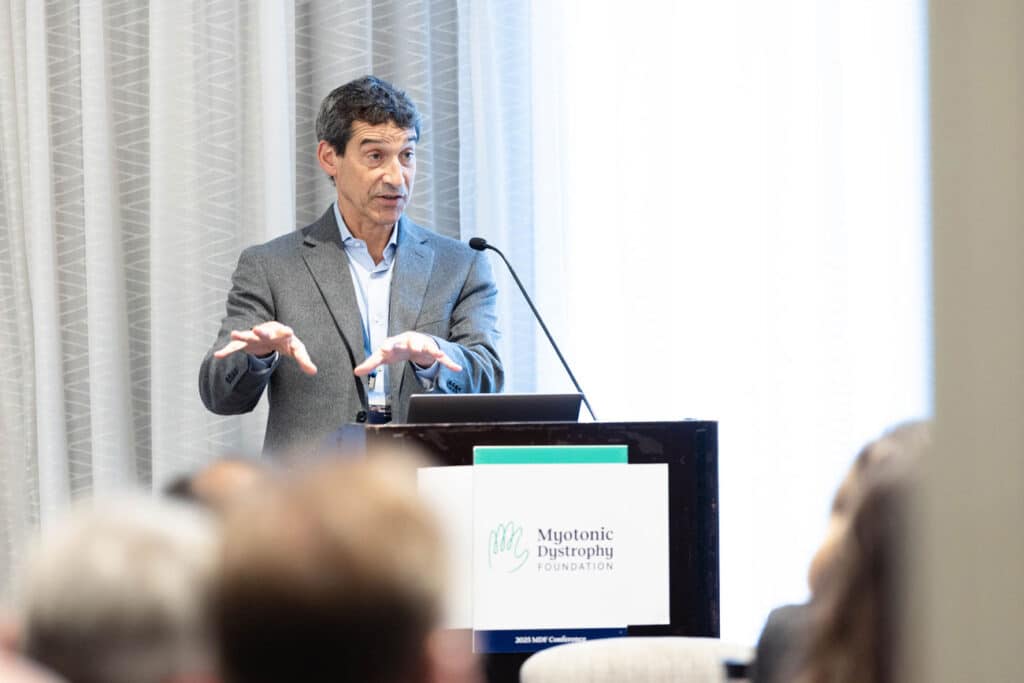
The MDF Conference Becomes a Community Tradition
Across three successive Family Conferences and an expanding support-group network, MDF created dependable places for people living with DM and their families to learn from specialists, compare practical experience, and shape conversations with clinicians and researchers. These years established the Conference as MDF's central forum for shared learning and partnership.

2012
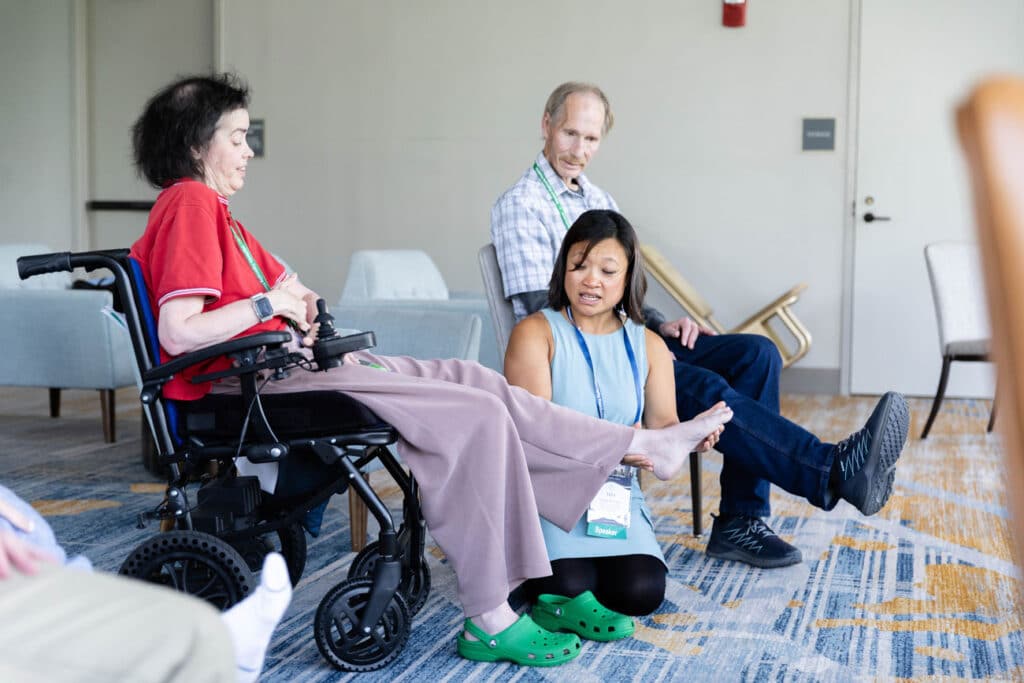
Building a Formal Network of Peer Support
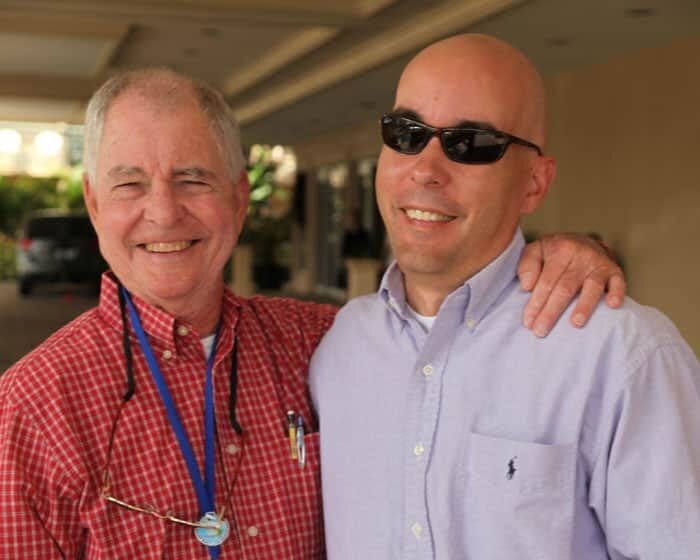
Building on early local groups formed alongside the Foundation, MDF began developing a more formal, facilitator-led support group network. The program created reliable spaces for people living with DM, family members, and caregivers to share experience, practical guidance, and connection, and grew to more than 20 groups over the next four years.
2012
Establishing One-on-One Support
By 2012, MDF was providing one-on-one support through what is now the Warmline, the first year for which MDF has recorded usage data. This direct channel helps people living with DM and families navigate questions, find trusted resources, and connect with support when they need a knowledgeable person, not only information.

2013
Preparing Researchers and Families for DM Clinical Trials
MDF launched the Myotonic Dystrophy Family Registry (MDFR), supported expansion of the Myotonic Dystrophy Clinical Research Network (DMCRN), and used its sold-out Conference to help families understand drug development and trial participation. Together, these efforts began aligning community knowledge, patient-reported data, research sites, and industry around a more trial-ready field.
2013
Extending Trusted Education Beyond the Conference
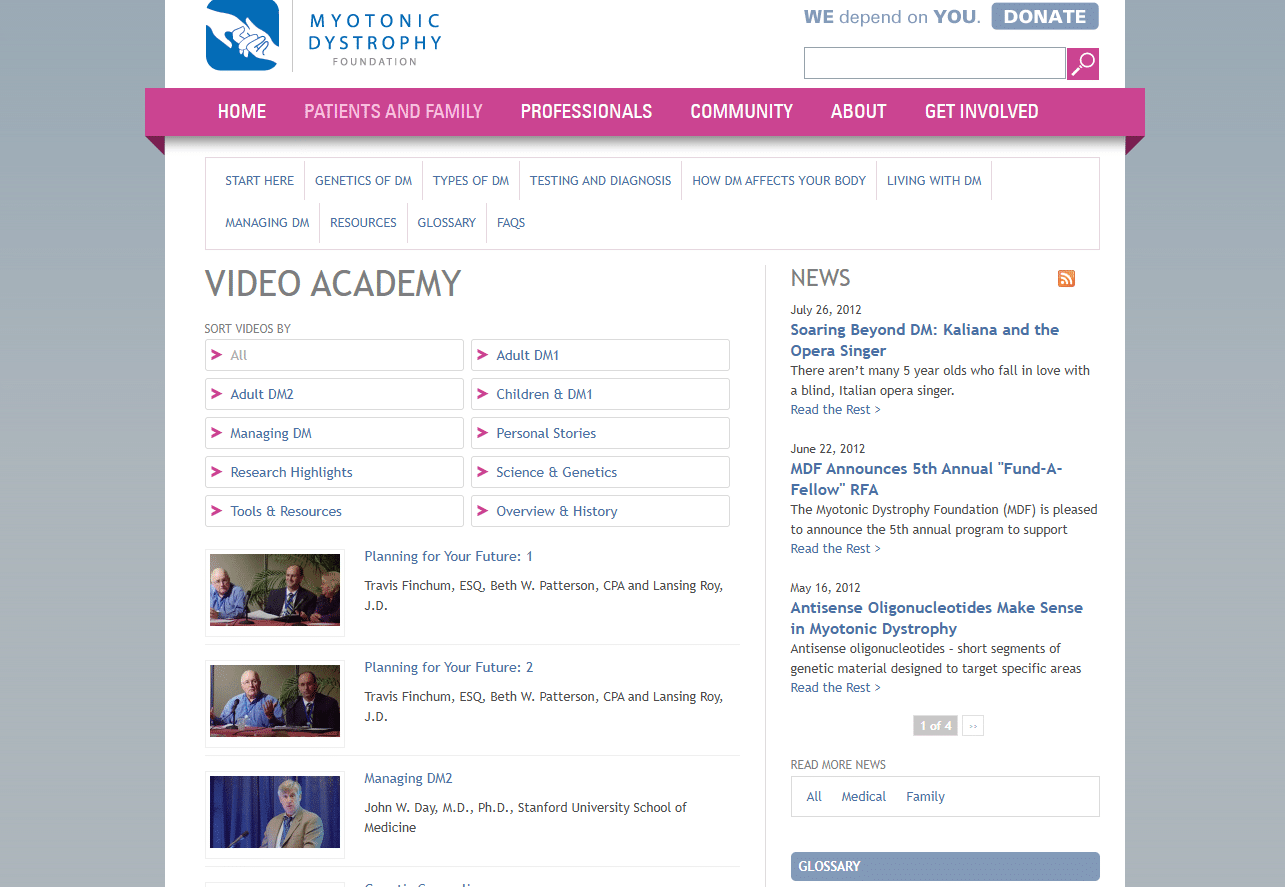
With MDF's first webinar added to the new Digital Academy in 2013, trusted DM education began reaching beyond a once-a-year gathering. The on-demand library created a foundation for year-round access to clinician, researcher, and community expertise and later grew to include hundreds of hours of practical and scientific programming.
2014
The DM Community Speaks Before Congress
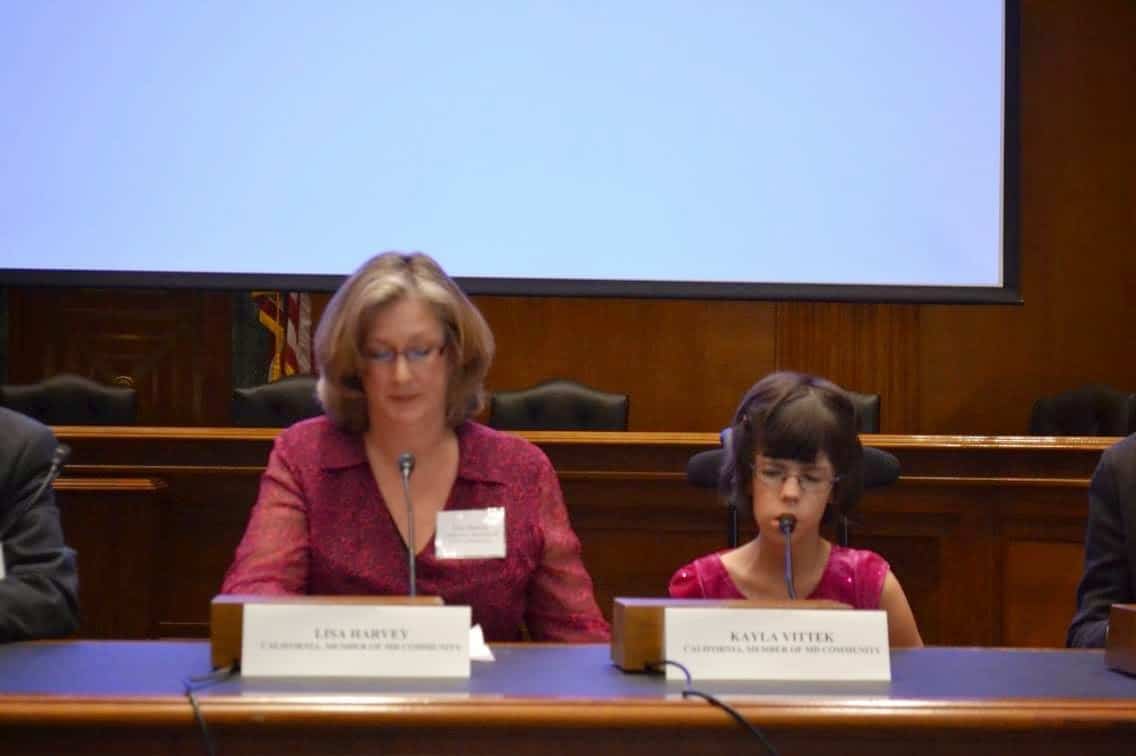
In 2014, Kayla Vittek, who lived with congenital DM, and her mother, MDF founding Executive Director Lisa Harvey-Duren, testified before the U.S. Senate Health, Education, Labor, and Pensions Committee in support of reauthorizing the MD-CARE Act. That year MDF also held its first Capitol Hill advocacy effort, establishing a sustained program through which families could shape research funding and public policy.

2014
The First Disease-Modifying DM Trial
A phase 1-2 study of IONIS-DMPKRx-2.5 opened at multiple U.S. sites, marking the first clinical trial designed to target the underlying disease process in DM1. The therapy did not reach sufficient levels in skeletal muscle, but the study showed that a multicenter disease-modifying trial in DM could be conducted and its lessons informed later approaches.

2015
A Coordinated Plan for Care and Treatments
MDF committed to a three-year, multimillion-dollar program (nicknamed Myotonic 3.0) to address barriers slowing care and therapy development. MDF expanded clinical research capacity, advanced work on biomarkers and endpoints, engaged regulators and industry, and began developing consensus care recommendations. A landmark workshop brought community representatives, researchers, NIH, FDA, and industry around a shared development agenda.

2015
A New Research Partnership in the UK
MDF's sister organization was established in London as the Wyck Foundation, later MDF UK, creating a complementary source of investment in DM science. Over nine years, MDF UK funded 16 research grants and 22 fellowships, often in partnership with MDF, extending donor support to investigators and projects across the international field.

2016
The Community Defines Meaningful Treatment
MDF convened the first-ever FDA-approved Externally-Led Patient-Focused Drug Development meeting for DM, giving people living with DM and caregivers a formal role in defining treatment priorities, acceptable risk, and meaningful benefit. The resulting Voice of the Patient Report created a durable record for regulators, researchers, and drug developers.

2017
Turning Community Needs Into Disability Support
Warmline conversations and other community feedback showed that families were struggling to navigate disability applications. MDF responded with a practical Social Security toolkit and sustained engagement with the Social Security Administration, helping secure congenital DM's addition to the Compassionate Allowances program and faster decisions for eligible families.

2018
Federal Research Funding Opens to DM
Following years of advocacy by MDF and the DM community, myotonic dystrophy became eligible for the U.S. Department of Defense Peer Reviewed Medical Research Program. Eligibility opened competitive federal funding to DM investigators and established a pathway that MDF and community advocates have successfully protected year after year.

2018
The First Consensus Care Recommendations for DM1
MDF brought together international experts to address the lack of consistent clinical guidance for a complex, multisystem disease. The resulting consensus-based recommendations for adults with DM1 gave clinicians and families a shared, evidence-informed framework for managing care across multiple body systems and laid the groundwork for guidance covering additional DM populations.

2018
Defining Priorities for Genome Editing Research
MDF convened experts from academia, NIH, FDA, industry, and the community to assess how genome editing might be responsibly advanced for DM1. The workshop defined scientific, delivery, safety, and development questions and informed a competitive funding initiative for early-stage research targeting DMPK.

2019
New Care Guidance for DM2 and Children
MDF expanded consensus-based guidance to adults with DM2 and children with congenital or childhood-onset DM1, while introducing a one-page Anesthesia Quick Reference Guide. These resources translated expert consensus into practical tools that families could carry into clinical settings, strengthening safety and more consistent care across DM types and ages.

2019
Kayla Vittek's Advocacy Legacy
MDF established the Kayla Vittek Memorial Award for Outstanding Community Advocate to carry forward the legacy of a young advocate who lived with congenital DM and testified before Congress with her mother, Lisa Harvey-Duren, in 2014. Presented annually, the award recognizes community members who raise awareness, advocate for research and resources, and help shape a stronger future for people affected by DM.

2020
Creating Year-Round Virtual Support and Education
When COVID-19 interrupted in-person care and connection, MDF expanded virtual support groups, launched its Friday Afternoon Webinar Series, moved the Conference online, and published timely clinical and practical guidance. The response accelerated year-round access to peer support and trusted expertise beyond geography and established digital programs that continued after the immediate crisis.

2020
Making Movement Part of Living Well with DM
MDF published an Exercise Guide in 2020 and developed Myotonic Dystrophy In Motion (MDIM), a community-led initiative that replaced uncertainty and outdated assumptions with practical, evidence-informed guidance on appropriately tailored movement. The first MDIM Awareness Month in 2024 added accessible webinars, movement activities, and one-on-one peer connection.
2021
Building a Global Movement for DM Awareness
MDF helped unite organizations around the world to establish the Global Alliance for Myotonic Dystrophy Awareness and the first International Myotonic Dystrophy Awareness Day on September 15. The Alliance created durable infrastructure for shared messages, coordinated action, and greater public understanding across national and organizational boundaries.

2021
Helping the DM Community Follow Treatment Development
By March 2021, MDF was sharing a public chart that organized potential DM treatments by stage of development. MDF now maintains a more comprehensive tool connecting active and past programs with trial information and community updates. The current MDF-designed resource credits community member Nate Uhl for the comprehensive research scan and original vision behind the pipeline.

2021
Opening Access to Experts and DM Drug Developers
Beginning in 2021 with Meet the DM Drug Developers and followed by expanded Ask-the-Expert programming, MDF created regular opportunities for community members to hear directly from clinicians, therapists, researchers, and companies and to ask questions in real time. Recordings in the Digital Academy made those conversations available on demand.
2021
The Community Shapes MDF's Strategic Plan
MDF adopted its first comprehensive strategic plan, shaped by input from more than 800 community members and stakeholders. The plan refreshed MDF's vision and mission, established shared values and a theory of change, and organized the Foundation's work around Community, Care, Cure, and Organizational Strength, making accountability to the community explicit.

2022
National Recognition and Record Federal Research Funding
The U.S. Senate formally recognized September 15 as International Myotonic Dystrophy Awareness Day through Senate Resolution 772. MDF also reported a record $8.8 million in PRMRP awards from the US government to DM researchers and launched an Early Career Research Grant program, showing how visibility, policy work, and investment in scientific talent were beginning to reinforce one another.

2022
Expanding Practical Resources Across Languages
MDF expanded access to practical guidance through Spanish- and German-language hubs, multilingual support programs, and new or translated resources. By 2024, the collection included guidance on mental health, exercise, heart health, nutrition, physical therapy, anesthesia, and medical alerts, helping families and clinicians use trusted information across languages and care settings.
2023
Investing in the Next Generation of DM Researchers
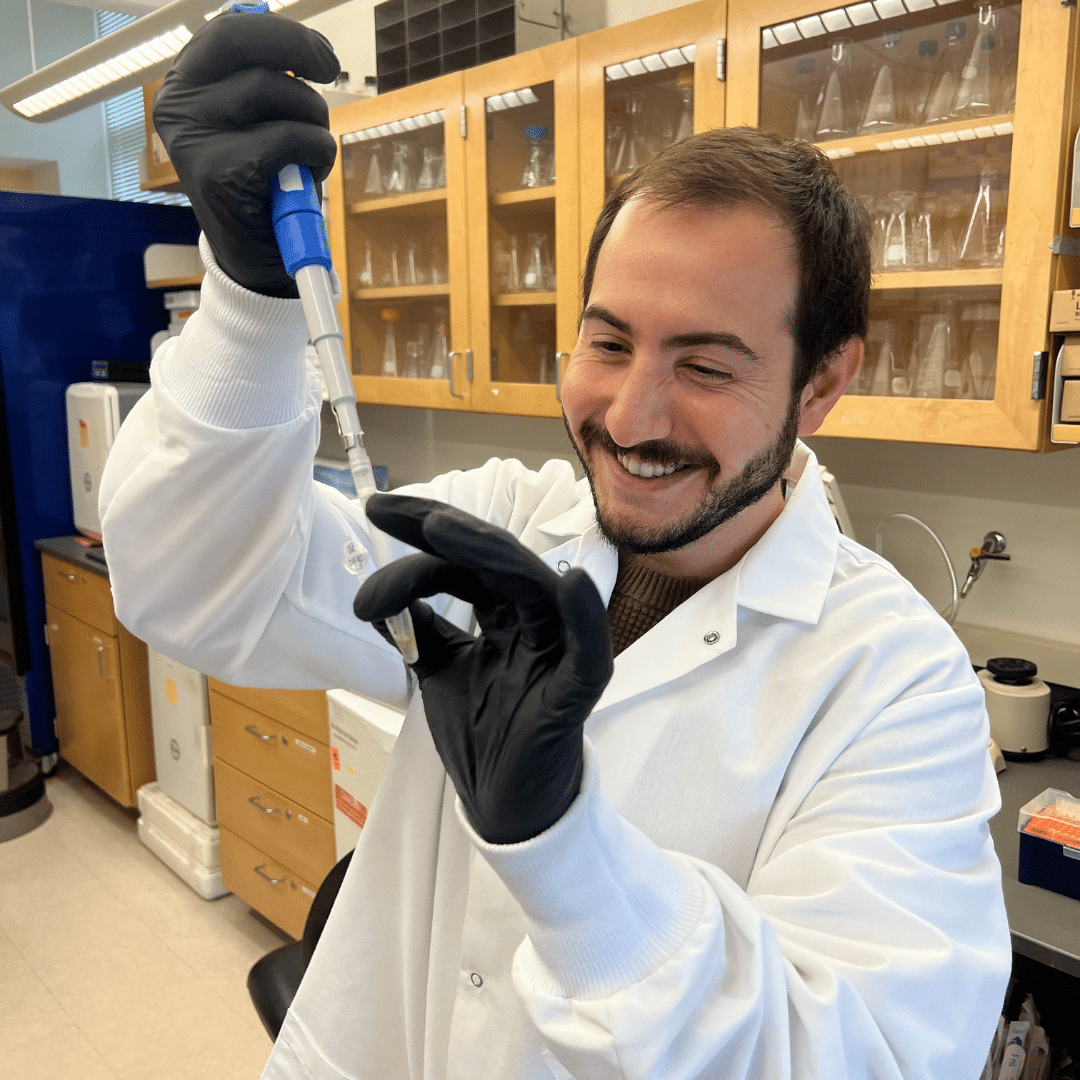
In 2023 alone, MDF committed more than $1 million to research grants and fellowships, including support for five Research Fellows and three early-career researchers. The investment advanced promising projects while addressing a strategic need: retaining skilled scientists and developing future leaders in a rare-disease field that depends on sustained expertise.
2023
The DM Community Returns to Capitol Hill
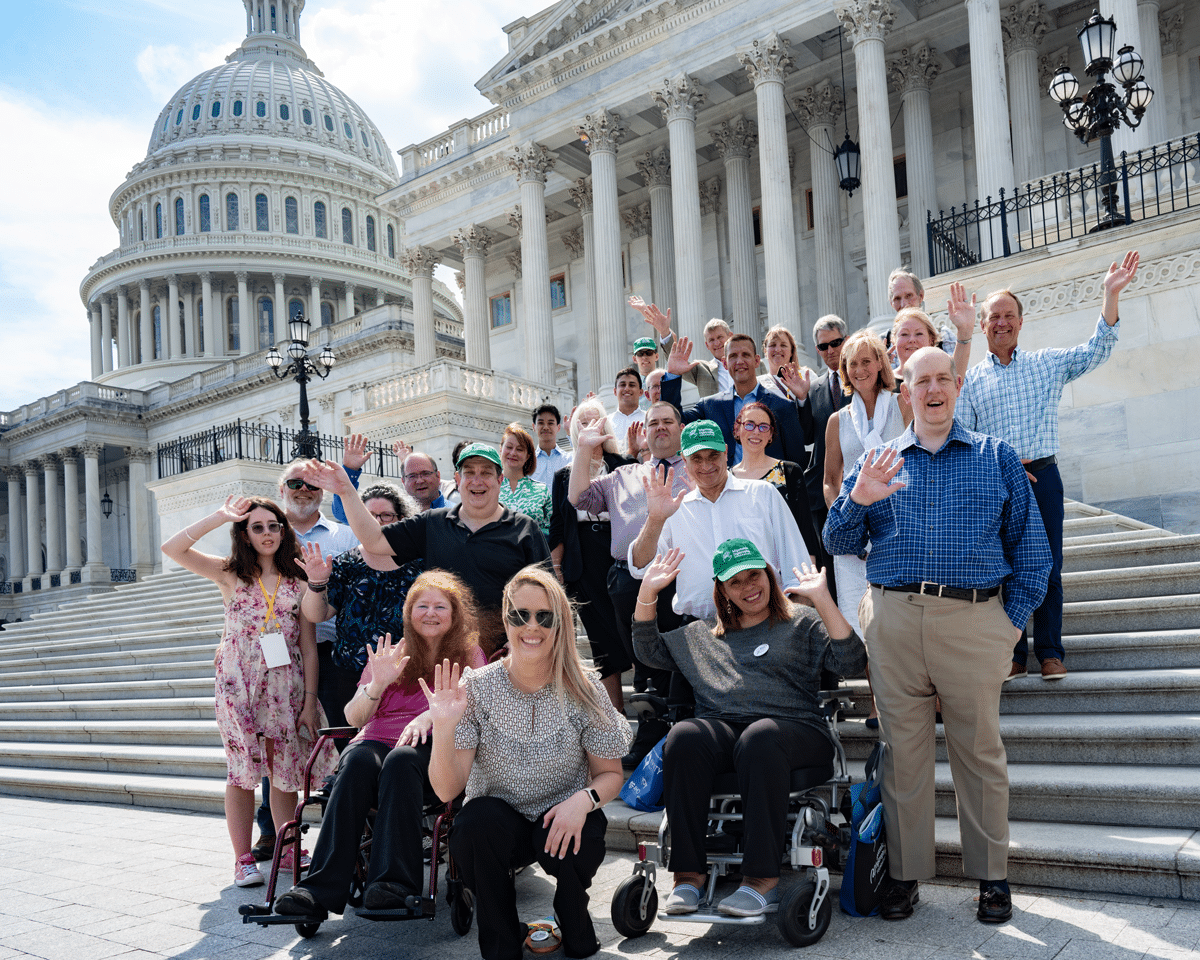
More than 130 advocates from 23 U.S. states and five other countries took part in MDF's 2023 Advocacy Day. In over 100 congressional meetings, they raised awareness about the disease among policymakers, made a specific case for continued PRMRP eligibility, and requested stronger federal investment in DM research, demonstrating both the reach of the community and the policy capacity MDF had built since 2014.

2024
Bringing Education Closer to Home
Six Regional Conferences brought trusted education, clinical expertise, research updates, and peer connection closer to families across the United States. The series welcomed 737 participants, including 346 people attending MDF programming for the first time, expanding access while preserving the Conference's role as a place for shared learning.

2024
Funding Promising Research at an Earlier Stage
MDF launched its Pilot Grants Program to help investigators test promising ideas and generate the early evidence needed to compete for larger awards. Alongside fellowships, Early Career awards, and high-priority grants, the program broadened MDF's research portfolio as the Foundation invested $1.7 million in research programs that year.

2025
Bringing DM Into the Newborn Screening Conversation
In partnership with the RNA Institute at the University at Albany, MDF co-hosted the first symposium dedicated to exploring newborn screening for DM. Researchers, clinicians, public health leaders, industry experts, and patient advocates examined advances in genome sequencing and identified priorities in research, pilot studies, policy, education, and community engagement needed to move the field toward earlier diagnosis and potential future screening.

2025
Direct Support Grows as More Treatments Reach Trials
MDF support groups welcomed 2,394 participants, the professionally staffed Warmline provided more than 800 one-on-one interactions, and community resources were downloaded more than 100,000 times. MDF also invested more than $1.5 million in research as 11 potential treatments advanced through clinical trials, showing growing capacity to support life with DM today while pursuing future treatments.

2026
Local Education and Global Research Collaboration
Four Regional Conferences culminated in Montréal, Canada, immediately after IDMC-15, where MDF and Muscular Dystrophy Canada collaborated to facilitate international scientific exchange with practical community education across borders. MDF also approved more than $1,000,000 for seven fellowships, two Early Career awards, and a high-priority project, sustaining both new research and the people who will carry it forward.
2026
Making Trusted Information Easier to Find and Use
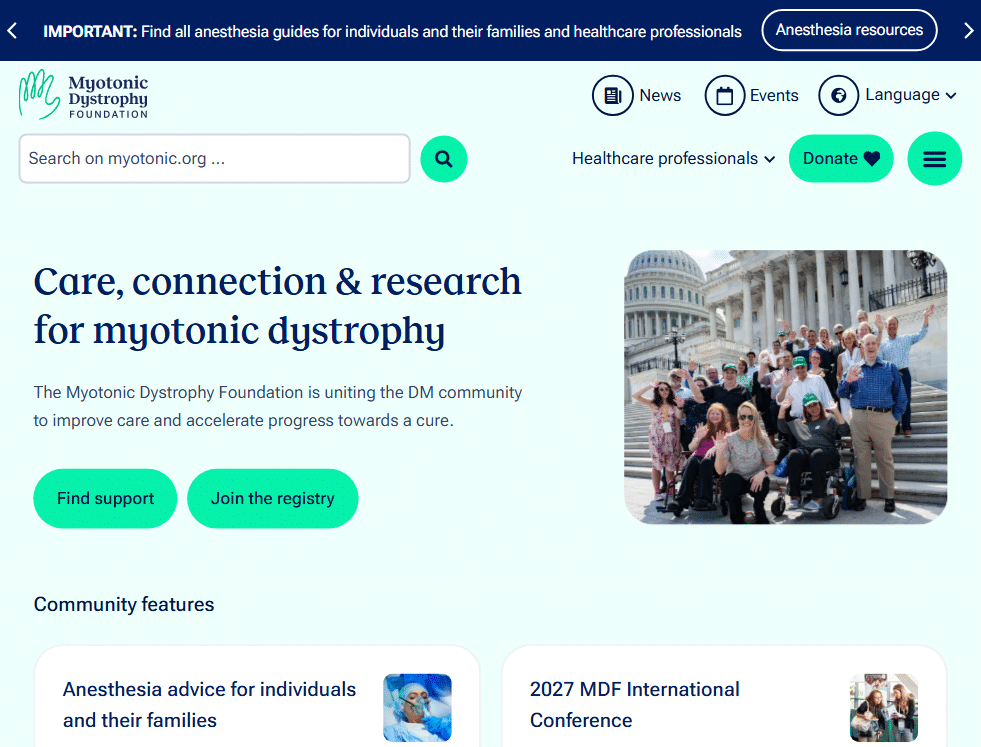
Guided by community feedback, MDF revised myotonic.org in 2026 to make trusted information, programs, and resources easier to find and use. Clearer pathways now help people living with DM, newly diagnosed families, caregivers, healthcare professionals, researchers, and supporters reach the information and support most relevant to them.